
Introduction to AEO, SEO, and GEO
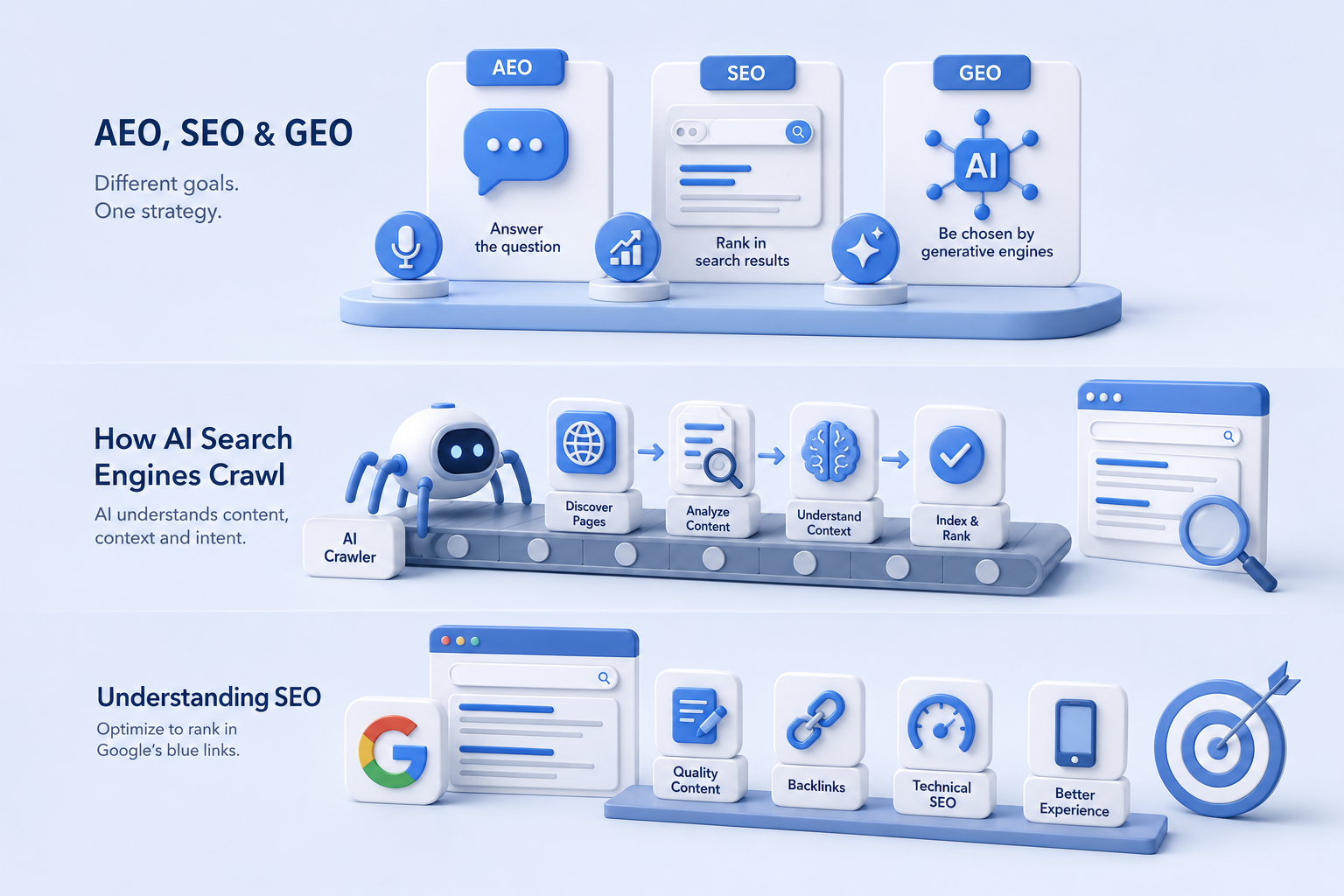
In the rapidly evolving landscape of digital marketing and online search technologies, understanding the distinctions between Answer Engine Optimization (AEO), Search Engine Optimization (SEO), and Generative Engine Optimization (GEO) is essential. Each of these concepts plays a unique role in shaping how information is accessed and delivered within the realm of artificial intelligence-driven search engines.
Search Engine Optimization (SEO) has long been the cornerstone of digital marketing, focusing on enhancing website visibility within traditional search engine results. SEO practitioners aim to improve various elements—such as keywords, backlinks, and content quality—to ensure that websites rank highly on search engine results pages (SERPs) for relevant queries. The focus of SEO is primarily on driving organic traffic, with an emphasis on aligning content to meet the needs and inquiries of users.
However, as technology has progressed and the capabilities of search engines have broadened, the emergence of Answer Engine Optimization (AEO) has indicated a shift in how information is presented to users. AEO prioritizes optimization strategies that are tailored to supply direct answers to user queries, particularly through voice search and smart assistants. As such, AEO seeks to enhance the likelihood of content being chosen as the definitive answer to a question posed by the searcher.
With the introduction of Generative Engine Optimization (GEO), the digital marketing landscape is witnessing another significant transformation. GEO emphasizes the optimization of content for generative AI systems, which can create responses and solutions based on user input using advanced algorithms. This methodology focuses on ensuring that the content is not only relevant but also adaptable to the evolving demands of AI technologies and user preferences.
How AI Search Engines Crawl: The Fundamentals
In recent years, the landscape of search engines has transformed significantly, particularly with the introduction of artificial intelligence (AI) technologies. Unlike traditional search engines, which primarily depend on predefined algorithms and keyword matching to index and rank content, AI search engines incorporate machine learning and natural language processing, enabling them to crawl and analyze web content in more nuanced ways.
One of the fundamental changes brought about by AI is the focus on semantic search. AI search engines prioritize understanding the context, intent, and meanings of search queries, as opposed to simply matching keywords. This shift means that content quality, relevance, and user engagement have become paramount factors in determining how a webpage is indexed and ranked. AI algorithms can now analyze various signals, such as user interactions, time spent on pages, and social sharing metrics, which contribute to a more comprehensive understanding of a site’s authority and importance.
Moreover, AI search engines utilize advanced crawling techniques to explore vast amounts of data rapidly. For instance, they can assess how frequently content is updated, the depth of information provided, and even the sentiment conveyed within articles. This capability helps AI systems to identify which content aligns best with user queries, further enhancing the efficiency of their crawling processes.
The implications of these advancements are significant for website visibility. Sites that prioritize high-quality, engaging content and align their strategies with AI search engine behaviors are more likely to achieve better rankings. In contrast, sites that solely rely on traditional SEO tactics without adapting to the evolving landscape may find themselves at a disadvantage. Thus, understanding how AI search engines crawl is crucial for anyone looking to optimize their online presence effectively.
Understanding SEO: Ranks in Google’s Traditional Landscape
Search Engine Optimization (SEO) has long been a pivotal aspect of digital marketing, focused on enhancing website visibility in organic search results. Historically, the primary aim of SEO has been to rank websites high on search engines such as Google, ensuring they appear prominently in what is often referred to as ‘Google’s blue links.’ These blue links represent organic search results, which are distinct from paid advertisements placed at the top of the search results page.
To effectively optimize for traditional search engines, various techniques have been developed over the years. These practices encompass on-page, off-page, and technical SEO. On-page SEO includes optimizing content quality, incorporating relevant keywords strategically, and ensuring proper formatting such as header tags, meta descriptions, and Alt text for images. By focusing on these elements, content becomes more accessible to both users and search engines, consequently improving rankings.
Off-page SEO, on the other hand, revolves around activities performed outside of the website. This includes earning backlinks from reputable sites, which serve as endorsements to search engines regarding the quality and authority of the content. Utilizing social media platforms to promote content, while indirectly influencing SEO, also plays a vital role in increasing site traffic and visibility.
Technical SEO addresses the backend of a website, concentrating on aspects such as site speed, mobile responsiveness, and the structure of content. A site optimized for these technical elements enhances user experience—an increasingly significant ranking factor in Google’s algorithm.
Ultimately, optimizing for traditional search engines requires a comprehensive strategy that blends these techniques seamlessly. The evolving nature of SEO demands adaptability, as search algorithms continually improve, necessitating that marketers stay informed on trends and updates to maintain optimal search performance.
What is GEO and Why it Matters in AI Search Technologies
GEO, or Generative End-user Optimization, pertains to the methods and techniques employed in the creation of AI-driven content that is tailored to the preferences and needs of the end user. In the context of AI search technologies, particularly those driven by neural networks, GEO plays a crucial role in ensuring that information is presented in a way that is not only relevant but also engaging to users. AI platforms, such as Perplexity, utilize GEO methodologies to curate data and generate comprehensive overviews, thereby enhancing the user experience.
Understanding GEO is vital for content creators and marketers alike as it reflects the shifts in how information is consumed online. Unlike traditional SEO practices that focus primarily on algorithms and keyword placements, GEO involves a more nuanced understanding of user intents and the context in which information is sought. The rise of AI-powered search systems necessitates a strategic approach where content is optimized not just for search engines but for the nuances of human comprehension and interaction.
Optimization strategies for GEO can vary widely but generally include leveraging high-quality, contextually relevant content that resonates with user queries. This includes the integration of semantic keywords that align with the knowledge graph utilized by AI systems, making content more likely to be favored in generative outputs. Furthermore, focusing on the clarity and structure of information can greatly influence its citation in AI-generated environments. Therefore, adopting a GEO-centric approach enhances the visibility and relevance of content in an evolving landscape shaped by artificial intelligence.
The Role of AEO: Getting Selected as Answers in Chat Interfaces
Answer Engine Optimization (AEO) has emerged as a vital component within the realm of digital content, particularly in the context of AI-driven conversational interfaces. As search engines evolve, they increasingly prioritize delivering direct, concise answers tailored to user queries. In this landscape, content creators must pay careful attention to how their material is presented and structured to enhance its visibility in chat interfaces.
To effectively integrate AEO principles, it is crucial to begin with an in-depth understanding of user intent. This involves not only recognizing the specific questions users are likely to pose but also anticipating the nuances of how those questions are framed. By focusing on long-tail keywords and natural language processing, content can be crafted to resonate with the way users typically converse. Utilizing structured data markup such as schema can further aid AI in comprehending the content’s relevance and context.
Moreover, employing conversational tone and straightforward language improves accessibility and engagement. Content should be succinct, ideally providing answers within the first few sentences. This aligns with the preferences of AI technologies that sift through vast amounts of information to extract precisely what users are seeking. Incorporating bullet points or numbered lists can enhance clarity and allow for a more digestible format, appealing to both human readers and AI algorithms.
Additionally, engaging with commonly asked questions related to the subject matter not only enriches the content but also enhances the likelihood of being selected as an answer in chat interfaces. By developing comprehensive FAQs or utilizing query-based content strategies, writers can effectively position their insights as authoritative responses. Ultimately, harnessing AEO means innovating how information is organized and presented, ensuring it meets the immediate needs of users in a conversational format.
Crawler Behavior: Key Differences Across AEO, SEO, and GEO
Search engine crawlers, particularly those powered by artificial intelligence (AI), exhibit distinctive behaviors based on the optimization strategies they are programmed to analyze. In the realm of digital content, AEO (Answer Engine Optimization), SEO (Search Engine Optimization), and GEO (Geo-Targeted Optimization) each require unique approaches and parameters that influence how content is evaluated. Understanding these nuances is critical for content creators and marketers aiming to improve their visibility and engagement.
AI crawlers focusing on AEO prioritize content that directly addresses user queries with precise answers. This involves analyzing the structure of information, such as FAQs and concise paragraphs that facilitate quick comprehension. AEO-driven content is often designed to appear in featured snippets or knowledge panels, making it vital that AI recognizes not only the information quality but also the format and presentation of data.
On the other hand, SEO emphasizes broader search engine metrics such as keyword relevance, backlink profiles, and content depth. Crawlers assess various signals, including title tags, meta descriptions, and overall site architecture to determine authority and relevance. SEO strategies often involve optimizing for several related keywords, enabling AI to categorize content effectively within the vast index of web pages.
In contrast, GEO focuses specifically on local search metrics, where crawlers evaluate elements like geo-tags, local backlinks, and region-specific content. This information helps search engines serve localized results tailored to user geographic locations. Geographic relevance becomes essential, as AI crawlers discern between generalized and localized content to enhance user experience.
Recognizing these differences in crawler behavior across AEO, SEO, and GEO is crucial for effective strategy implementation. Each optimization approach requires tailored content and technical considerations that align with the objectives of AI crawlers. A robust understanding ensures that digital strategies resonate with targeted audience segments and subsequently enhances visibility across diverse search engine platforms.
Content Structure Essentials: Leveraging LLMs.txt, Structured Data, and Semantic HTML
In the rapidly evolving digital landscape, effective content structuring has emerged as a critical aspect of optimizing a website for various forms of searches, including AEO (Answer Engine Optimization), SEO (Search Engine Optimization), and GEO (Geographic Optimization). A key component of this structure is the integration of LLMs.txt files, structured data, and semantic HTML, which collectively enhance a site’s visibility and performance.
The LLMs.txt file offers a foundational element for optimizing content, specifically tailored for large language models (LLMs). This file provides guidelines that help these models to crawl and interpret the data presented on a website. By clearly defining the roles of different content sections and ensuring that the information is accessible, webmasters can facilitate better understanding and indexing by search engines. This structured approach not only enhances the overall effectiveness of the site’s content but also plays a significant role in improving the likelihood of appearing in relevant search results.
In addition to LLMs.txt, the utilization of structured data is another essential strategy for improving content efficiency. By systematically marking up information using schema.org vocabulary, webmasters can convey critical context related to their content. This context allows search engines to generate rich snippets, which can significantly enhance CTR (Click-Through Rate) from SERPs (Search Engine Results Pages). Moreover, structured data lays the groundwork for AEO, making it easier for AI-driven search engines to extract data and deliver precise answers to user queries.
Furthermore, semantic HTML elevates the structural integrity of a website, enabling search engines to better comprehend the hierarchical relationships between data. By using HTML5 elements like <header>, <section>, and <article>, developers can create meaningful content categorization that informs AI algorithms on the organization and relevance of page content. This clarity benefits both AEO and SEO, allowing websites to better meet user expectations.
Renderability: Why It Matters in AI Search
In the ever-evolving landscape of AI-driven search engines, the concept of renderability plays a significant role in how content is interpreted and indexed. Renderability refers to the ability of an AI search engine to effectively load and display the content of a page as intended by the website creators. This aspect is particularly vital, as it influences the visibility of web pages within search results. When content is rendered correctly, it not only enhances user experience but also improves rankings on search engine results pages (SERPs).
To optimize for renderability, website owners must consider several factors. Firstly, the use of clean and efficient coding practices is essential. This includes minimizing the use of heavy scripts and ensuring that pages load quickly. Search engines prioritize sites that offer a seamless experience, and a slow-loading page can negatively impact both user engagement and search visibility.
Furthermore, implementing responsive design techniques is critical in today’s mobile-first index approach. Websites should adapt their layouts to provide optimal viewing on various devices, as this can impact how AI search engines assess and categorize the content. Proper markup using HTML5 and CSS can enhance the visibility of important elements like headings and images, ensuring they are not overlooked during the indexing process.
Another key component to consider is the use of structured data. By utilizing schema markup, webmasters can effectively communicate the context and purpose of their content to AI search engines, improving the chances of better indexing. Overall, enhancing renderability through these optimization techniques not only aids AI in accurately processing website content, but also positions the site favorably within organic search results.
Using UpRender’s AI-Readiness Score as a Practical Evaluation Tool
In the evolving landscape of search engine optimization, site owners must assess their content to meet the requirements of AEO (Artificial Intelligence Optimization), SEO (Search Engine Optimization), and GEO (Geographic Optimization). UpRender offers a tool known as the AI-Readiness Score, which serves as a practical evaluation metric for determining the effectiveness of a website’s alignment with these modern search engine expectations.
The AI-Readiness Score evaluates various content factors, assisting site owners in identifying areas that may require enhancement. This score functions as a checklist, enabling users to analyze their content against the specific demands of AEO, SEO, and GEO. By focusing on elements such as keyword integration, content relevance, and geographic targeting, this score provides actionable insights that are crucial for improving online visibility.
Adopting UpRender’s AI-Readiness Score can help streamline the optimization process. Site owners can start by conducting a thorough content audit, assessing how well their current website aligns with AI search algorithms. This metric not only highlights strengths but also pinpoints weaknesses that may hinder a site’s performance in search engine results. Moreover, by incorporating relevant keywords and content strategies that satisfy AI-driven search demands, site owners can enhance user experience and engagement.
To utilize the AI-Readiness Score, site owners can regularly review the score to track progress and effectiveness over time. This ongoing evaluation fosters an adaptive approach to content creation, ensuring that site owners remain responsive to the dynamic nature of search engine crawling technology. By systematically refining their content using the insights from UpRender’s AI-Readiness Score, site owners can effectively bridge the gap between traditional SEO practices and the new standards set forth by AI-driven search algorithms.